
Executive Leadership
Long-horizon stewardship and strategic governance.
Board of Directors
The Foundation’s Board provides long-horizon stewardship across our global engagements, ensuring continuity of institutional perspective, disciplined governance, and measured strategic oversight.
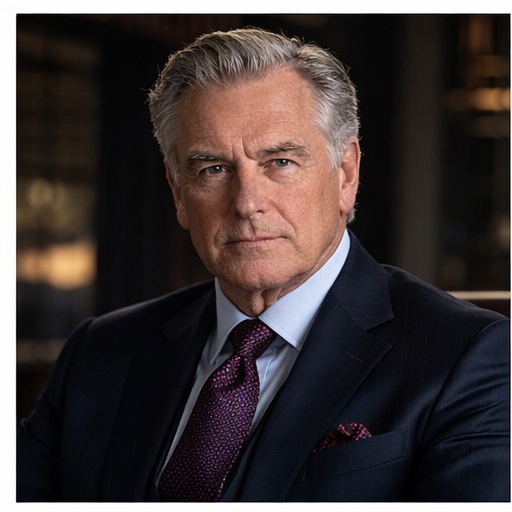
Alistair Vane
Chairman
Mr. Vane has served as Chairman since 2003, providing long-range strategic guidance and continuity across the Foundation’s international engagements. His academic work at Cambridge examined the evolution and resilience of financial institutions during periods of systemic disruption, with particular attention to informal stabilizing mechanisms operating outside conventional regulatory frameworks.
Following his postgraduate work, Mr. Vane held advisory roles with several European financial houses and sovereign-linked trusts during a period of accelerated market liberalization and institutional restructuring. His work focused on long-horizon asset continuity, cross-border capital alignment, and institutional positioning in emerging financial environments.
During the mid-to-late 1990s, Mr. Vane transitioned into private consultancy, advising select clients on strategic preservation, structural reorganization, and intergenerational asset stewardship. His guidance was sought in environments characterized by regulatory transition and evolving governance frameworks.
Since assuming the Chairmanship, Mr. Vane has overseen the Foundation’s strategic posture and institutional development, ensuring continuity of perspective across successive operational cycles. He continues to advise on long-term alignment and organizational durability.
He currently divides his time between London and Geneva.
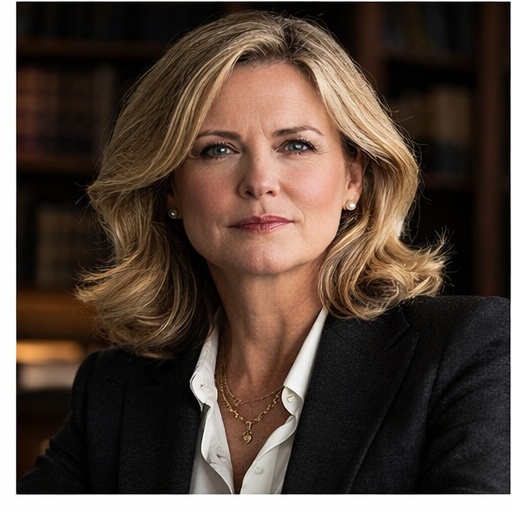
Dr. Mireille Caulder
Director of Strategic Research
Dr. Caulder directs the Foundation’s analytical and research initiatives, overseeing interdisciplinary efforts focused on institutional adaptation, governance resilience, and long-cycle structural transformation.
Her doctoral research at Yale examined informal authority networks and continuity mechanisms within decentralized governance environments. Her fieldwork included extended archival and observational research across multiple regions undergoing administrative and political transition, with emphasis on institutional persistence in the absence of formal structures.
Following her academic work, Dr. Caulder held research and teaching affiliations with universities and private research institutes in both the United States and the United Kingdom, contributing to applied research programs and structured analytical initiatives.
She later transitioned into private-sector advisory roles, developing analytical frameworks and strategic assessments for organizations operating across diverse institutional contexts and regulatory environments.
Since joining Lockridge Foundation in 2006, Dr. Caulder has overseen the development of its research methodologies and continues to guide its long-term strategic assessments and academic partnerships.
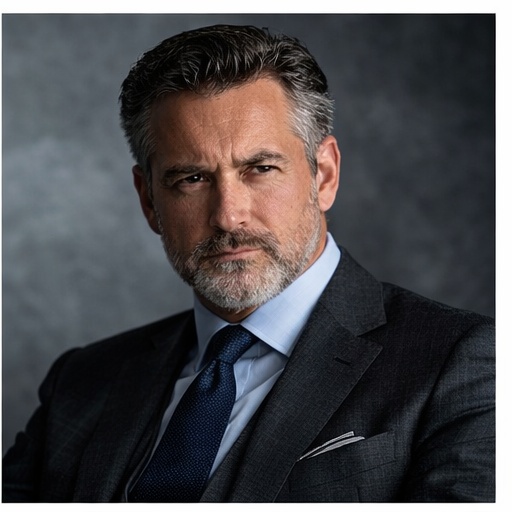
Rafael Orlov
Director of Global Infrastructure
Mr. Orlov oversees the Foundation’s infrastructure and operational continuity initiatives, with responsibility for long-horizon systems planning, facilities coordination, and structural resilience across geographically distributed environments. His academic training at École Polytechnique emphasized systems engineering, applied mathematics, and the behavior of complex networks under variable operating conditions.
Following completion of his MBA at Columbia University, Mr. Orlov held roles supporting infrastructure modernization and capital deployment initiatives across Central and Eastern Europe during a period of rapid institutional transition. His work involved coordinating financial sponsors, engineering teams, and regional authorities, ensuring continuity of operations across evolving regulatory and administrative frameworks.
In the early 2000s, Mr. Orlov undertook extended international assignments focused on infrastructure stabilization, systems continuity, and operational reliability. These engagements involved supporting projects where timelines, governance structures, and technical requirements evolved in parallel, requiring careful alignment of logistical, financial, and structural priorities.
He later transitioned into private advisory roles centered on infrastructure continuity, facilities planning, and long-term operational durability. His work emphasized the preservation of critical capacity and the maintenance of dependable operational environments under shifting external conditions.
Since joining Lockridge Foundation in 2008, Mr. Orlov has directed the development of its infrastructure strategy, ensuring that the Foundation’s operational environments remain stable, resilient, and adaptable across diverse jurisdictions and institutional contexts.
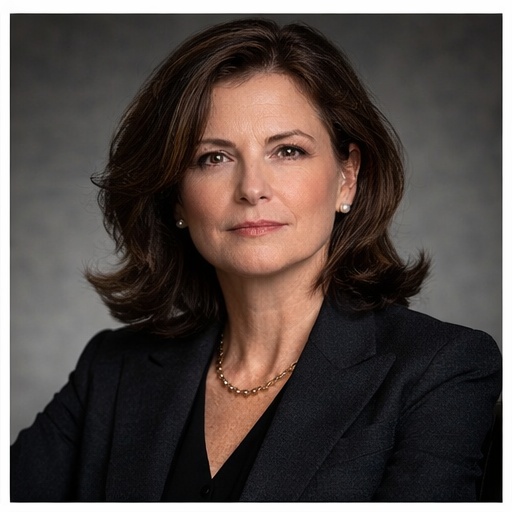
Eleanor Ashcroft
Director of Cultural and Institutional Affairs
Ms. Ashcroft oversees the Foundation’s cultural partnerships and institutional relationships, supporting long-term collaboration with academic, archival, and civic organizations. Her work emphasizes continuity of institutional memory, responsible stewardship of legacy materials, and durable partnership frameworks.
Her academic work at Oxford examined the transmission and preservation of intellectual traditions during periods of political transformation. Following postgraduate study in archival sciences at Princeton, she developed expertise in provenance standards, collection governance, and private-to-institutional transfer frameworks.
Ms. Ashcroft has held research affiliations and advisory appointments supporting libraries, cultural institutions, and private collections across Europe and North America. Her work has focused on establishing consistent custodial practices and strengthening trust between private benefactors and public-facing institutions.
In addition to partnership development, she supports initiatives that promote careful, long-form dialogue across sectors, ensuring that sensitive historical context is preserved and interpreted with appropriate rigor.
Since joining Lockridge Foundation in 2007, Ms. Ashcroft has guided its cultural engagement strategy, supporting programs that preserve continuity of record and deepen institutional cooperation among long-standing partners.
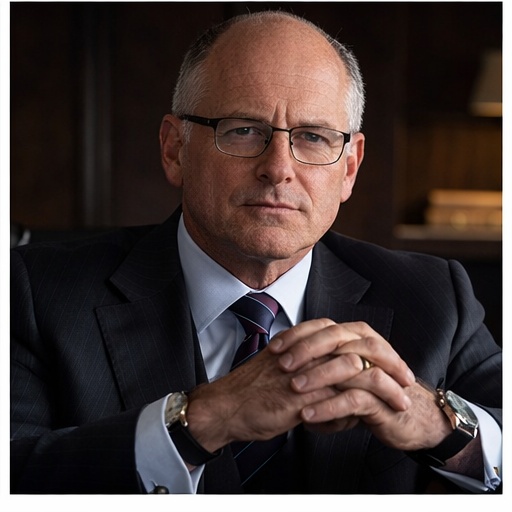
Thomas Kade
Director of Risk and Continuity
Mr. Kade directs the Foundation’s risk assessment, operational continuity, and strategic resilience initiatives. His work focuses on ensuring institutional durability across diverse operational environments, with emphasis on continuity planning, structural reliability, and adaptive response frameworks.
His academic training at the United States Military Academy emphasized strategic planning, systems coordination, and operational analysis under conditions of uncertainty. He later completed graduate study at the Harvard Kennedy School, where his work focused on international security policy, continuity-of-operations frameworks, and long-range institutional stability.
Following his formal education, Mr. Kade served in operational and planning roles supporting complex international initiatives. His responsibilities included coordinating multidisciplinary teams, developing continuity protocols, and supporting operational planning efforts in environments characterized by evolving logistical and structural conditions.
He subsequently transitioned into private-sector advisory work focused on risk modeling, operational resilience, and continuity planning for organizations operating across multiple jurisdictions. His work emphasized maintaining functional stability and organizational coherence under variable and unpredictable conditions.
Since joining Lockridge Foundation in 2005, Mr. Kade has overseen the development and implementation of continuity frameworks designed to ensure the Foundation’s long-term operational stability and institutional persistence.
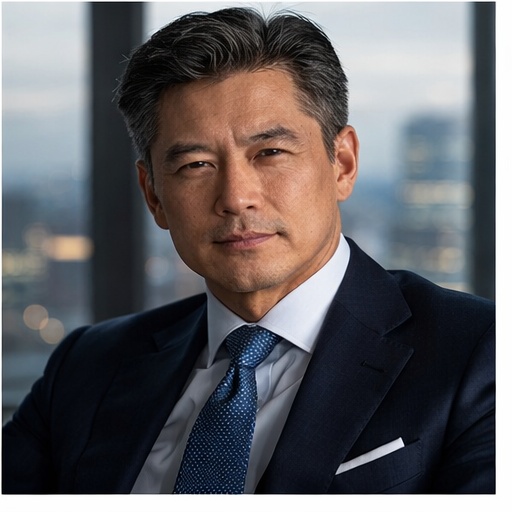
Jun Park
Director of Strategic Technologies
Dr. Park leads the Foundation’s technology and analytical infrastructure initiatives, overseeing the design and maintenance of resilient information systems that support long-horizon institutional operations. His academic research focused on distributed systems architecture, fault tolerance in decentralized networks, and adaptive protocols for maintaining continuity across heterogeneous environments.
At MIT, he concentrated on computational modeling and secure systems design. His doctoral work at Stanford examined distributed consensus frameworks and network persistence under degraded conditions, contributing to advancements in redundancy engineering and self-healing network architectures.
Following completion of his doctorate, Dr. Park held research and development roles supporting advanced communications and data systems, where he contributed to infrastructure projects emphasizing scalability, continuity, and secure analytical integration across distributed environments.
Since joining Lockridge Foundation in 2009, he has directed the development of its analytical infrastructure and communications architecture, ensuring long-term technological durability and operational continuity across the Foundation’s global engagements.
Governance
The Board convenes periodically to review long-term initiatives, organizational continuity, and institutional partnerships. Directors are selected through internal nomination and an extended evaluation process aligned with the Foundation’s mandate and operating principles.